Chapter 30 — Behind the Olive Tree
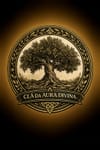
Joel had never crossed the stone behind the old olive tree.
Not because of a written prohibition.
There was no need.
People who lived on the plateau knew where the village ended without Sandra fencing everything. The square rose gently toward the tree. To the left stood the broken rock children liked to climb to see the eastern side. To the right, two paths opened toward the gardens and the fountain.
Behind the olive tree, something else began.
That morning, Joel stood between the two.
Lina lay on this side.
The earth was still darker near the roots. No monument. Marta had refused too many flowers, Diogo had refused a handsome stone, and Sandra had asked no one’s opinion when deciding the grave would not become a spectacle.
Only a low stone with the name.
LINA.
Rosa had left a pale ribbon there before sunrise.
Farther down, nineteen cultivators waited in the square.
Four groups.
Three complete.
One with too much space between Nilo and Bardo.
In Joel’s ledger, the Mountain’s defense still had twenty names. On the ground, Breno’s absence still counted with them.
Joel pressed the ledger to his chest.
“You were called,” Marta said behind him.
He turned just enough to see her by the path, a basket on her hip.
“I was.”
“Then go.”
“I’m going.”
Marta measured his two feet, still on the near side of the stone.
“You’re rehearsing.”
Joel looked down.
He was.
Marta continued toward the fountain without helping further.
The Oliveiras’ ancestral house stood a few paces beyond the tree and a little above it. It wasn’t large in the way Pedra Baixa would call large. No tower, no balcony for display, no brightly colored roof. A long building of graphite-colored stone and dark wood, two wings joined by a covered passage, a low wall shielding the inner courtyard.
From the square, it looked smaller because the olive tree stood in front.
From here, Joel realized it was old.
Very old.
Not because of moss. Hardly any grew on the walls in use. The age showed where no hand had managed to erase it: steps worn down in the middle, corners rebuilt with stone of another color, replacement wood fitted into older joints, tool marks on blocks cut before Heren was born.
Perhaps before anyone could remember who had cut them.
The door was old too.
The hinge wasn’t.
A small olive tree had been branded into the wood above the latch. The design had lost its roughness without losing its shape.
Joel stopped before it.
Matte iron. Thick. No rust. The pin turned inside a fitting so exact that the heavy door opened without a creak when Sandra pulled it from within.
In Pedra Baixa, a hinge like that would be displayed for sale.
Here it was just what made a door work.
Sandra filled the doorway.
Her black hair was tied back. Her dark-green clothes followed the Oliveira pattern without calling attention to it: dense fabric, firm stitching, light forearm protection, a small olive tree on her chest. Nothing shone. Nothing was wasted.
Her hand was still bandaged beneath its guard.
“Come in.”
Joel entered.
Then stopped again.
Sandra closed the door.
“Keep stopping at every stone and you’ll finish tomorrow.”
“I’ve never been in.”
“I know.”
“That doesn’t help.”
“Wasn’t meant to.”
The passage smelled of dry wood, blade oil, and a bitter herb Joel didn’t know. On the right, a common room stood open. Table, bench, two chairs, a low brazier. On the left, shelves held folded blankets, leather boxes, and lamps.
Nothing looked decorative.
Even so, Joel began adding things up without meaning to.
The boxes’ leather had no cracks. The blankets were thick, all made of the same firm fabric. The lamps had clear glass without bubbles. Three knives lay on a bench, not a loose handle among them. A food cupboard stood half open: sacks of grain protected from damp, dried meat, salt, roots, jars of preserves, herbs separated by colored cord.
No gold.
An irritating absence of bad things.
Sandra noticed where he was looking.
“The ledger.”
Joel became Joel again.
“Here?”
“Farther in.”
She passed through a second door. Joel followed.
The inner courtyard caught him unprepared.
Not its beauty.
Its use.
Broad stones paved the ground. In the middle, years of feet had drawn paler circles without any paint. Five dark wooden posts stood along the right side, cut at different heights. Archery targets on the opposite wall had been repainted so often that their centers had become thick scars.
To the left, a roof sheltered training weapons, weights, ropes, shields, and blades in simple racks. Joel recognized good iron before he came close. Heren complained about poor alloy often enough to teach through irritation.
A short sword had a worn grip and a perfect blade.
A shield bore an old crack held by three dark metal staples.
A blunt axe leaned against the last rack. Too small for Diogo.
Each piece carried a tiny olive tree, hidden near the grip or on the inner face.
“All this is yours?” Joel asked.
Sandra didn’t stop.
“It was.”
Joel understood the distinction.
Some weapons weren’t waiting for an owner.
They were keeping one.
At the back of the courtyard, an older wall cut across the newer building. Almost black stone. Names engraved in uneven lines, some clear, others worn down to half a letter.
They didn’t make a pretty family tree.
They made survival.
In the middle stood a pale stone plaque, an olive tree carved in low relief. Generations of hands had polished the trunk.
Joel slowed.
“The Mark of the Ancestors?”
Sandra confirmed it with a brief gesture.
“My mother used to talk about it.”
“Your mother was presented here.”
It took Joel a moment.
“My mother wasn’t an Oliveira.”
Sandra finally stopped.
“I know.”
She offered no more explanation.
Joel looked at the stone again.
The understanding came slowly: Oliveira blood wasn’t the only way to belong to the Mountain.
Before he could ask, a side door opened. Brina came out carrying a baby wrapped in a gray blanket, followed by a woman from the eastern gardens. The woman’s eyes were red from crying, but she didn’t look sad.
Brina handed her the child.
“Now take him for a feed before he decides tradition fills his stomach.”
The woman laughed quietly.
“He’s decided already.”
The baby complained at once.
Brina pointed.
“See?”
The two women passed Joel. The mother gave Sandra a small nod and continued toward the exit.
Joel watched.
“She was invited.”
“She was.”
“Because her son needed to be presented.”
“Yes.”
“Then who can come in here?”
Sandra started walking again.
“Blood enters by right. Duty enters when called.”
“And curiosity?”
“Stays where you stood for five minutes.”
The record room lay beyond the courtyard, protected by a low, dry door. There Joel understood that his first impression in the passage had barely scratched the surface.
Paper.
Not scattered piles. Paper stored properly.
Plain-spined books filled three bookcases. Boxes protected old sheets from damp. Wax sealed the ink jars. There were straight wooden rulers, small bronze weights, fine string, seals, and maps rolled in leather tubes.
Joel was offended.
“You had all this?”
Sandra put her own ledger on the table.
“We did.”
“I spent three months writing with ink that wouldn’t stay mixed.”
“You never asked.”
“I didn’t know it existed.”
“Then not knowing worked.”
Joel stared at the shelves.
The most Oliveira answer possible to owning good things.
Don’t show them.
Use them when needed.
Sandra pulled out a chair.
“Sit.”
He sat.
She unfolded a map of the plateau.
No child’s drawing. The sheet showed the habitable summit, the springs, garden plots, the larger orchard, the workshop, the four patrol routes, and the lines where the stone began falling away into each sector.
Joel traced a finger above it without touching.
“All this is the summit?”
“About seven square kilometers of habitable land.”
On paper, the village looked small again.
Sandra marked the center.
Square.
Old olive tree.
Ancestral house.
Three things almost touching.
Then the houses, gardens, fountain, workshop, storehouses, orchards, watch posts.
“I want a second record,” Sandra said.
Joel took out his pen.
“Second how?”
“The square’s ledger stays public. Facts, reports, arrivals, departures. This one doesn’t.”
She touched the map.
“I want to know who started coming up after Pedra Baixa. Who asks how many Oliveiras there are. Who wants to know about the climb. Who buys too much food for a short journey. Who talks about Silar without having been there. Who heard Lina’s name alongside ours.”
Joel didn’t write at once.
“That’s spying.”
“That’s paying attention to people paying attention to us.”
“Sounds like spying.”
“Then write small.”
He breathed out through his nose and began.
At the top of the sheet, he wrote:
OUTSIDE RECORD.
Thought.
Crossed it out.
Wrote:
WHO IS WATCHING.
Sandra didn’t correct him.
Joel pointed his pen at the map.
“What do I call this place?”
“Which place?”
“Here. The house. Headquarters of the Divine Aura Clan?”
Sandra answered quickly.
“No.”
“Why?”
“Because the clan won’t fit inside a house.”
Joel waited for the rest.
She gave him none.
So he stood and went to the narrow window.
Outside, the nineteen cultivators still waited. Heren crossed the square with a toolbox. Brina went downhill with the woman and the baby. Two children carried small baskets to the garden. A man repaired the storehouse gutter. Kauã was a dark shadow on a roof, choosing an angle.
Beyond them, the plateau opened in green and stone until it met the forest.
Joel returned to the table.
In the corner of the page he wrote:
Oliveira ancestral house.
“Better?” he asked.
“Better.”
“And the clan?”
Sandra put a finger at the center of the map and opened her hand over the whole sheet.
Joel didn’t ask again.
When they returned to the courtyard, the house began opening to work.
Not everyone at once.
Heren went in first to inspect the storeroom Wellington had opened. Touched box, latch, canvas, hook, shelf. Complained about two things that were fine and one that really needed replacing.
Brina came next to count food and medicine. Marta entered with her, not as Lina’s mother, but because she knew which house had a feverish child, which elder ate less salt, which family lied when they said they still had flour.
Nilo was given access to the map room. The other patrol leaders stayed in the courtyard, marking sectors with stones, rope, and pieces of wood. They didn’t need to see the whole map to do their work. They needed to know where their part began and whom to call when it ended.
Sandra made no speech.
Only said:
“The house opens for work. Whoever enters on duty takes no family stories outside. Whoever enters by blood does not use blood to get in the way of duty.”
Diogo, leaning against a post under medical orders, asked:
“Does that second part have a name?”
Sandra didn’t look at him.
“Several.”
Heren laughed inside the storeroom.
The groups received new signals, dry rope, two reinforced shields, partial maps, and an obligation none had carried before: every patrol would return with what it had seen and what it had chosen not to follow.
Joel opened a line for each duty.
North.
South.
East.
West.
In the north patrol’s fifth place, he wrote no replacement.
He wrote:
BRENO — ABSENT.
Sandra saw.
Didn’t have him erase it.
“Twenty names,” Joel said. “Nineteen people.”
“Then don’t turn a number into a body,” Sandra answered.
As noon approached, the courtyard no longer looked like a secret.
It didn’t look like a public square either.
Still a house, but now every closed door needed a better reason than habit.
That was when Wellington entered.
A training sword in one hand, three small stones in his pocket. His black-violet clothes were clean, already mended at the cuff. The olive-tree emblem showed small on his chest and larger across his back when he turned to close the door.
The courtyard was full enough for everyone to notice he had arrived last.
Sandra asked:
“Finished staying away?”
“For now.”
“The inventory isn’t finished.”
“I know.”
“The western signal?”
“Nilo and I finished it before the square filled.”
Nilo nodded confirmation.
Sandra didn’t thank him.
She didn’t use his lateness against him either.
She pointed at the targets.
“From today, training isn’t the gap between problems. It’s an answer.”
Wellington looked at the nineteen cultivators, Breno’s place in the ledger, the open doors.
“To which question?”
“The one each of us got wrong when Lina died.”
No one liked it.
That was why it helped.
Joel closed the ledger and headed out. Before he crossed the passage, he noticed something on the courtyard wall.
Between two old weapons, a piece of cloth lay preserved beneath wood and glass. Most of its color had faded. Black remained, violet, and a pink line around the old embroidered olive tree.
Wellington passed in front of it.
For a second, a faint pink light ran along the hand holding his sword.
It didn’t touch the cloth.
Didn’t make the house respond.
Only repeated the color.
Joel had stopped again.
Wellington noticed.
“What?”
Joel opened the door.
“Nothing.”
This time he wasn’t rehearsing.
Behind him, the pink line on the old cloth stayed dark.
But Joel had seen.
That color hadn’t begun with Wellington.